The literary origins of the Good Samaritan: Oded and the priestly law of brotherly love

The Lukan parable of the Good Samaritan contains certain intriguing similarities with the obscure story of the prophet Oded in 2 Chronicles 28. As I hope to show here, the correct interpretation of Luke's parable lies in these similarities. We thus begin with Oded. According to the Chronicler, during the reign of king Ahaz Judah … Continue reading The literary origins of the Good Samaritan: Oded and the priestly law of brotherly love

Functional eschatology at Thessalonika

Paul outlines what appears to be a novel eschatological scenario in his first letter to the churches at Thessalonika. He writes that at the coming of Christ believers will be raised from the dead, collected into the air, and brought into the presence of the Lord (4:16-17). At the sound of the last trumpet there … Continue reading Functional eschatology at Thessalonika

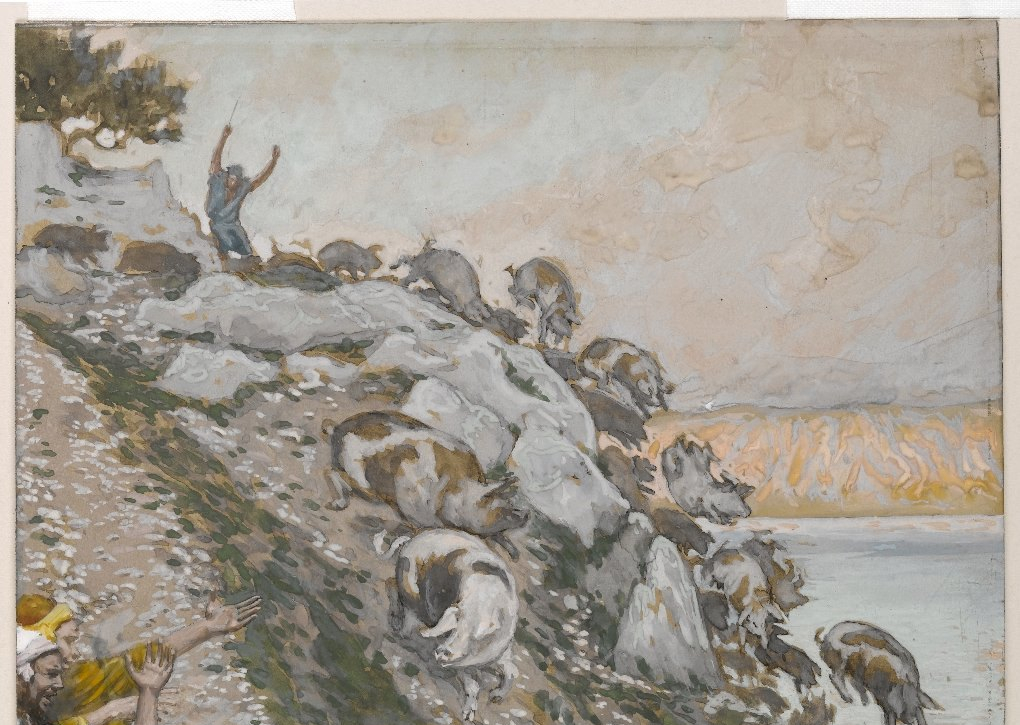
Legion and the revenge of the Giants

A tale of three strong men: Satan, Babylon, and Rome On a few occasions Jesus attempts to clarify what his exorcistic ministry really means. On one of those occasions he claims the expulsion of demons proves that God's kingdom has drawn near (Matthew 12:28, Luke 11:20). On another occasion, Jesus' spiritual success is said to … Continue reading Legion and the revenge of the Giants

Signs of the kingdom: the dispossession of Legion

Crises in heaven and earth The coupling of political realities with spiritual realities is a hallmark of Jewish apocalyptic. In such works the heavenly stage is reflected upon the earthly stage. Examples of this relationship are numerous: disturbances in the heavens spell disaster for the earth, the unrolling of heavenly scrolls ensures the pouring out … Continue reading Signs of the kingdom: the dispossession of Legion

Revelation 11 and the whole prophetic narrative

"The time is fulfilled and the kingdom of God is at hand; repent and believe in the gospel." (Mark 1:15) The first public words issued by Jesus were prophetic in scope. They announced God's imminent regal action in history to judge and restore his people. As we might expect then, Jesus' precursor John preached an … Continue reading Revelation 11 and the whole prophetic narrative

The parable of the stilled storm

Multiple independent layers of tradition remember Jesus as an exorcist, a healer, a raiser of the dead, a multiplier of food, and a calmer of storms. These deeds of power, more than simply displays of God-given authority, conveyed in themselves the kingdom message. They too were parables of the kingdom; or as the Fourth Evangelist … Continue reading The parable of the stilled storm

“All of these I will give you”

Again, the devil took him to a very high mountain and showed him all the kingdoms of the world and their splendor; and he said to him, “All these I will give you, if you will fall down and worship me." (Matthew 4:8-9) For much of church history—and down to the present day—Jesus' temptation in … Continue reading “All of these I will give you”

Images of the kingdom: banquet and harvest

In this post I want to examine two common images employed by the New Testament writers in their attempt to describe God's kingdom: the banquet and the harvest. These images, I believe, have been largely overlooked due to their eschatological implications. But it is these symbols that constitute the heart of Jesus' kingdom message. Banquet … Continue reading Images of the kingdom: banquet and harvest

Which Parables go back to Jesus?

All of Them? John P. Meier's excellent A Marginal Jew series attempts to peer behind the curtain of the Gospel portraits to glimpse the Jesus of history. In broad brushstrokes, Meier's restrained and measured work produces an Elijah-like eschatological prophet of the age to come. Scholars like Paula Fredriksen and Dale Allison reach similar conclusions. In his … Continue reading Which Parables go back to Jesus?