The objective of the previous two posts was to determine the historical forces that compelled an anonymous Christian (i.e. Mark) to construct the first narrative account of Jesus as the Son of God. Two factors proved central to this reconstruction of Mark’s rhetorical aims: 1) Israel’s failed rebellion against Rome spanning AD 66-74, and 2) the Flavian imperial propaganda that consequently emerged out of the ruins of Jerusalem. The God of Heaven had crippled the Jewish people, extinguished their cult, and humiliated their messianic pretensions as repayment for their revolutionary stratagem and had, in so doing, awarded the pagan Vespasian and his sons world dominion. Such men, conquerors of Judea and manifestly anointed by powerful gods, were now recipients of cultic devotion among all the tribes of the earth. Every knee bowed to Vespasian.
These theo-political developments generated an atmosphere not only of hostility against Christianity, a sect that worshiped the Jewish God and awaited the Jewish Messiah, but also of doubt: Where was this Son of David who comes to rule the nations on behalf of the God of Israel? Had not the firstfruits of the resurrection of the dead ripened some 40 years ago? Unnerving questions like these bore down on Mark. So the Muses, in turn, conscripted him to collate and shape earlier traditions about Jesus. Carried by their whims, Mark devised a viable Christian alternative to the institutional Flavian gospel of Pax Romana that prevailed until Domitian’s demise in AD 96.
The Lukan muses
We can apply the same kind of examination to the Lukan corpus—the Gospel of Luke and the Acts of the Apostles. Why did yet another anonymous Christian take up this kind of expansive literary project? Why did Luke create a “well-ordered” account of John the Baptist, Jesus, Peter, and Paul in the style of Septuagintal history (e.g. Βíβλοι Βασιλειῶν) and Greco-Roman biography?
I have addressed one facet of this question previously. Luke’s Gospel attempts to resolve difficulties presented by the failure of older eschatological schema to materialize. In this regard the Lukan redactor took particular interest in rehabilitating Mark’s misleading Olivet Discourse, though redressing the apocalyptic urgency of Paul and Matthew was also necessary. Composing his Gospel now decades after the Jewish War and the Temple’s destruction, Luke recognized that the Parousia had not followed close behind these great signs as was forecast before (cf. Mark 13:14-27, Matthew 24:15-31, 2 Thessalonians 2). Luke concluded that the arrival of God’s kingdom in power and glory was a bit farther out; perhaps some interregnal “times of the nations” must run their course before the Lord comes with his angels to judge the world.
The unique material and framing exhibited in Luke-Acts betrays some additional priorities:
- Continuity: Luke seeks to bridge the gaps between the ancient Israelite religion represented by devout Jews like Mary and Zechariah, and the Christian religion now practiced across the Empire by the Greek churches. John, Jesus, Peter, and Paul are shown to be aligned not only with one another, but also with the ancestral cult of Israel.
- Legitimacy: Luke seeks to both legitimize Christianity as the true continuation of Israel’s scriptural deposit and delegitimize Judaism as a distortion of those same scriptures. According to Luke, the writings of Moses, the Psalms, and the Prophets abundantly forewarn of a time when the Jewish people would be disowned for their rejection of a controversial Messiah, thus paving the way for Gentiles to enter into covenant with Israel’s God. Consequently, Greek Christianity is depicted as ancient and worthy of legal protections, while Judaism is portrayed as religiously innovative and socially disruptive.
- Apology: Luke seeks to portray Christianity in ways that are attractive to those Greeks and Romans who have become skeptical of polytheistic idolatry, willing to see it as a crude, unscrupulous, and powerless system. To do this, Luke characterizes Christians as morally rigorous, philosophically sophisticated, spiritually potent, and politically innocuous. No rebellion like the one seen in Judea is coming from a Christian quarter.
Although these concerns are heightened in the Lukan works when compared to other early Christian texts, they are not uniquely Lukan concerns. Rather, in what follows I will argue that the essential motivating principle behind the creation of Luke-Acts lies not with these broad Christian preoccupations per se, but with the contested legacy of the Apostle Paul at the outset of the 2nd century.
Paul’s legacy adrift
In the year 100 AD Paul was remembered throughout Asia Minor, Achaea, and Macedonia as the founder of the Greek churches—those communities that had turned from idols to God but had not undergone circumcision. Paul had brought the κήρυγμα concerning God’s Son—the gospel of Christ’s death, resurrection, and imminent return—to these peoples by performing deeds of power in their midst, miracles such as healing dysentery, blinding opponents, and casting out unclean spirits. Some of these churches had then exchanged written correspondence with Paul. Some had determined to preserve such letters for use as needed. All these years later, travelling preachers would still stop by from time to time (cf. Didache 11-13), and a letter of Paul could help the congregation either confirm or refute new teaching.
Yet at the turn of the century, Paul had been gone for nearly 40 years. In some regions memory of the Apostle may have started to grow dim. In order to safeguard Pauline Christianity for the future, certain measures had to be taken.
First, the letters still extant had to be collected and circulated. Although they had been works of occasional or ad hoc pastoral instruction, these letters could be read together as a unified expression of Paul’s theology. It was time for the Romans to read the letters addressed to Corinth and for the Corinthians to read the letter addressed to Rome. Bound together, the letters of Paul were thus transmitted throughout the empire.
Second, this collection of letters,1 along with oral traditions concerning Paul the man, had to be interpreted correctly, that is, in accordance with an orthodox rule. After all, various heresies (i.e. sects) were afoot, each one vying to receive the Apostle’s stamp of approval. These included, on one end of the spectrum, devotees of Paul: Antinomians, Marcionites, Gnostics of various stripes (e.g. Docetists), and the proto-orthodox represented by Luke. Antinomians saw in Paul’s letters the triumph of faith over ethics. Marcionites saw in them a breaking away from the God and scriptures of Israel. Gnostics saw these elements and more—the repudiation of the physical world and the fleshly body.
On the other end, Jewish Christians known as Ebionites possessed a compelling connection to the first generation of Christians that bypassed Paul altogether. Jesus, his Disciples, and the first patriarch of the church in Jerusalem, James the brother of the Lord, had all been Jewish. Why shouldn’t followers of Jesus be Jewish as well? The Ebionites came to the conclusion that Paul had bungled the gospel of Jesus by offering salvation without circumcision, the gospel without the Law. He was therefore an apostate and a false apostle. With circumcision a requirement for inclusion, this sect struggled to acquire Greek converts.
So the widespread proliferation of Paul’s thought, encoded in the letter collection, had resulted in a multiplicity of competing interpretations, each one able to find textual support.
Interpretations and interpolations
At an early stage in the appropriation of Paul’s legacy, each of these aforementioned groups, the proto-orthodox included, penned letters in the name of the Apostle. Such texts allowed “Paul” to explain himself with regard to things found to be troubling, confounding, or lacking in his already accepted letters. The Pastoral Epistles are perhaps the most famous example of this phenomenon; they provide Pauline-style direction regarding οἰκονομία (i.e. household management) for a time far removed from Paul himself. The letter to the Ephesians,2 besides summarizing various elements of Paul’s theory of redemption, accentuates the mystical and immanent aspects, perhaps in a bid to attract cultures more interested in esoteric cults than in millenarianism. We know also of a third Pauline epistle to the Corinthians, a letter of Paul to the church in Alexandria associated with Marcion, two Apocalypses attributed to Paul, one of Gnostic origin, a correspondence between Paul and Seneca, and a handful of significant revisions to the authentic letters as evidenced by the manuscript tradition. Each of these pseudonymous literary devices attempted to steer interpretation of the Pauline corpus in a certain direction.
Some other proto-orthodox letters, these in the names of apostles other than Paul, directed Paul’s legacy away from Antinomian shoals (cf. 1 Timothy 1:8-11). A letter from James, for instance, whether intended to correct misinterpretation or to criticize Paul directly, warned that believers in Christ are “justified by works and not by faith alone” (James 2:24, cf. Romans 3:28).
Likewise, a letter from Peter (to no church in particular) recognized the challenges posed by the circulation of Paul’s writings:
Therefore, beloved, while you are waiting for these things, strive to be found by him at peace, without spot or blemish, and regard the patience of our Lord as salvation. So also our beloved brother Paul wrote to you according to the wisdom given him, speaking of this as he does in all his letters. There are some things in them hard to understand, which the ignorant and unstable twist to their own destruction, as they do the other scriptures. You therefore, beloved, since you are forewarned, beware that you are not carried away with the error of the lawless and lose your own stability.
2 Peter 3:14-17
Ebionite literature in the name of Clement of Rome, here a companion of Peter, puts Paul’s anti-Law message in the mouth of Simon Magus.3 Peter defeats the heretic in a battle of miracles and reclaims his own contested legacy:
Some among the Gentiles have rejected my lawful preaching and have preferred a lawless and absurd doctrine of the man who is my enemy. And indeed some have attempted, while I am still alive, to distort my words by interpretations of many sorts, as if I taught the dissolution of the Law… But that may God forbid! For to do such a thing means to act contrary to the Law of God which was made to Moses and was confirmed by our Lord in its everlasting continuance. For he said “The heaven and the earth will pass away, but not one jot or one tittle shall pass away from the Law.”
Letter of Peter to James 2:3-5
Based on this evidence, it appears that some of Paul’s students taught not only a gospel without circumcision, but also a kind of moral lawlessness. The advancement of this view in the name of Paul presented a major problem that the proto-orthodox (and others) felt obligated to answer. Good works and a righteous life, if not observance of the Law of Moses itself, alongside faith in God and Christ, were indeed necessary for salvation.
Narrativizing the letter collection
A secondary stage in the management of Paul’s reputation was the compilation of Paul’s deeds and preaching into narrative form. These “Acts of the Apostles” accorded 2nd century Christians the opportunity to express their agenda in the πρόσωπον of Peter, Thomas, John, and notably, Paul. A major theme of many of these works—the supremacy of celibacy over marriage—enjoyed strong support from one of Paul’s best known letters (cf. 1 Corinthians 7). Nonetheless, at least three early Acts presented Paul as the champion of true Christianity, whatever that entailed: The Acts of Paul, the Acts of Paul and Thecla, and the Acts of the Apostles, the earliest of the bunch.
Each of these Acts, even the prototypical Lukan Acts of the Apostles, attempted to give flesh and bone to the man conveyed in the letter collection. As Richard Pervo has demonstrated by textual comparison, Luke had access to an advanced collection of Paul’s letters, one that included the Deutero-Pauline letters of Ephesians and Colossians—these conventionally dated to the last decades of the 1st century—alongside the seven undisputed epistles and 2 Thessalonians.4
Luke mined from these letters key details concerning Paul’s life.
Through a window in a basket I was let down through the wall and escaped from his hands. (ἐχαλάσθην διὰ τοῦ τείχους)
2 Corinthians 11:33
Disciples took him by night and let him down through the wall, lowering him in a basket. (διὰ τοῦ τείχους χαλάσαντες).
Acts 9:25
I was violently persecuting the church of God and I was destroying it… They heard it said, “The one who formerly was persecuting us is now proclaiming the faith he was destroying.” (ἐπόρθουν… ἐπόρθει)
Galatians 1:13, 23
Everyone said… “Is this not the man who destroyed those who invoked [Christ’s] name in Jerusalem?” (ὁ πορθήσας)
Acts 9:21
I was zealous for the traditions of my fathers. (ζηλωτὴς ὑπάρχων)
Galatians 1:14
Paul said… “I was trained perfectly in the ancestral law, being zealous for God.” (ζηλωτὴς ὑπάρχων)
Acts 22:3
Three times I was beaten with rods. Once I was stoned. Three times I was shipwrecked; a night and a day I spent in the deep. (ἐρραβδίσθην… ἐλιθάσθην)
2 Corinthians 11:25
They stoned Paul (λιθάσαντες)… The magistrates ordered them to be beaten with rods (ῥαβδίζειν)… The centurion ordered those who could swim to jump overboard first and make for the land, and the rest to follow, some on planks and others on pieces of the ship.
Acts 14:19, 16:22, 27:43-44
Luke occasionally adopts Pauline style.
The Law… was arranged through angels. (ὁ νόμος… διαταγεὶς δι᾽ ἀγγέλων)
Galatians 3:19
You… received the Law as arranged by angels. (τὸν νόμον εἰς διαταγὰς ἀγγέλων)
Acts 7:53
Christ came and proclaimed peace. (εὐηγγελίσατο εἰρήνην)
Ephesians 2:17
Peter said… “God preached peace through Jesus Christ.” (εὐαγγελιζόμενος εἰρήνην)
Acts 10:36
I urge you to walk… with all humility. (μετὰ πάσης ταπεινοφροσύνης)
Ephesians 4:1-2
Paul said… “You yourselves know how I lived… serving the Lord with all humility.” (μετὰ πάσης ταπεινοφροσύνης)
Acts 20:18-19
In God’s divine forbearance he had passed over the sins previously committed.
Romans 3:25
Paul said… “In past generations, God let all nations go their own way… God overlooked the ignorance of earlier times.”
Acts 14:16, 17:30
Pervo appeals to these and other parallels, both with Paul’s letters and with Josephus’ writings (completed around 95 AD), to establish an early second century dating for Luke-Acts. It is around this time that Paul’s letters were conceivably in circulation as a unit as evidenced by 2 Peter 3 (a text dated late, sometimes well into the 2nd century), though direct evidence of a collection doesn’t appear until Marcion circa AD 150.
Concomitantly, Ryan Schellenberg has observed that Luke provides extended narrative vis-à-vis Paul only for those cities named in the letters.
To my mind, the fact that the list of Luke’s “redundant toponyms”—that is, those places mentioned only in passing—is almost precisely coextensive with the list of those cities unique to Acts [and thus not mentioned in the letters] is most credibly explained as a result of Luke’s dependence for his “primary toponyms” on his knowledge of the Pauline corpus.
Ryan Schellenberg, “The First Pauline Chronologist? Paul’s Itinerary in the Letters and in Acts.” JBL 138(1), pp.193-213
If correct, Acts of the Apostles supplies a narrative structure to be read alongside the letter collection. In this way Luke would be engaged in wrangling that Pauline deposit on behalf of his particular sect.
Luke’s conflation of Peter, James, and Paul
I’ve argued so far that Luke-Acts was written in response to the crisis of interpretation that arose as a result of the emergence of a circular literary unit ascribed to the Apostle Paul—a definitive catalogue of Paul’s views on all important matters. Luke set out to answer a weighty question: How were these sometimes confusing, sometimes radical, letters to be interpreted?
Luke, of course, rams down some of the popular misreadings that we’ve already discussed. His corpus is not amenable to Antinomians, Marcionites, Gnostics, or any others who drive too large a wedge between Paul and Judaism.
Luke’s primary aim, however, while certainly related to these threatening alternative perspectives, is to defend Paul as an authentic apostle of Christ, that is, as a co-worker of Peter and James, being ultimately subordinate to their leadership. Luke’s burden is to justify Paul’s life’s work—the uncircumcised Greek churches—as the legitimate heirs of the Law-observant savior and his Law-observant immediate followers. This is the needle that Luke must thread. His Paul must offer Gentiles a gospel apart from Jewish law and at the same time exist in harmonious communion with the circumcised “pillars” of the faith in Jerusalem.
How does he achieve this goal? Luke begins by fashioning Peter into the pioneer of the mission to the Greeks with the story of the centurion Cornelius. Peter will not only oversee the bestowal of the spirit upon the uncircumcised, he will then argue fearlessly in favor of eating with repentant and noble Gentiles, those whom God has made clean by spirit, not law. This very issue, table-fellowship between Christian Jews and Christian Gentiles, of course, generated significant tension between Peter and Paul as expressed in the Galatian letter. Yet now in Acts, Peter is the original apostle to the uncircumcised (Acts 15:7), not merely one of the apostles to the circumcised who stood aloof from Paul and Barnabas (Galatians 2:9). Indeed, the Lukan Peter declares before the elders of the church that Gentiles ought not be troubled with adopting Israel’s Law (Acts 15:9-11). In the same way, Luke casts James the brother of Jesus, and leader of the conservative faction that vexed Paul (cf. Galatians 2:12), as the very man who decides (seemingly unilaterally) in favor of a circumcision-less mission to the nations (Acts 15:19-21). In the end, Luke conforms both of these figures, Peter and James, to Paul’s image.
Luke’s Paul, on the other hand, is Judaized. In the conceptual world of the book of Acts, Paul is a Jew firmly devoted to the law and cult of Israel, even after becoming a Christian. Paul “observes and guards the Law” (Acts 21:24, cf. 25:8, 26:4-5, 28:17), purifying himself and making temple sacrifices in accordance with it (Acts 21:26, 24:18). Popular perceptions to the effect that Paul taught Jews to forsake the Law are here refuted (Acts 21:21); the “apostle to the uncircumcised” goes so far as circumcises a Jewish believer by his own hand (Acts 16:3). Paul’s controversial antics among the Greeks are shown to be in service of Judaism: Paul is entrusted by Christ and by Christ’s Disciples to “open the eyes [of the Gentiles], so that they may turn from darkness to light and from the power of Satan (i.e. polytheistic idolatry and licentiousness) to [Israel’s] God” (Acts 26:18). Paul teaches Gentiles to worship the Jewish God and to obey his laws as befits Gentiles (Acts 15:19-20), that is, excepting circumcision (cf. 1 Corinthians 7:19). Naturally, this Paul has no rivals in the Jerusalem church and bears no grudges against Jesus’ original followers. The attribution of the anonymous Letter to the Hebrews to Paul may have played a similar role in solidifying Paul’s place within, and not without, earliest (i.e. Jewish) Christianity.
Making landfall
When Acts is compared to the letters, it is clear that Luke has smoothed out (or thrown overboard) one of Paul’s greatest contributions to Christian scripture—his seeming disregard for the Law of Moses as an obsolete and counterproductive path toward justification before God. Such a brilliant summit of Christian theology—reclaimed, in a sense, during the Reformation—presented profound dangers and difficulties for many Christians such as those represented by Luke. The proto-orthodox church was unwilling and unable to integrate a Paul who was estranged from Judaism and thus estranged from Peter, James, and Jesus. Each of these heroic (and sometimes clashing) figures at the fountainhead of Christianity were to be incorporated cohesively into the religion of the Greek churches—the communities founded by Paul and now defended by Luke. The continued existence of these churches depended upon Paul’s successful rehabilitation, Paul’s successful reconciliation with Peter and James (and vice versa). Compromise was intrinsic to the process by which the rescue of the Apostle was secured. In Luke’s hands Paul would become the greatest apostle of Jesus to have ever lived, but the Law of Moses would also retain its broad moral force even among the foolish Galatians.
This Lukan form of Christianity—a religion at once firmly planted in Israel’s cultic heritage while also being distinct enough from synagogal Judaism to appeal to Greeks—prevailed over the Roman Empire in the following centuries. This should be acknowledged as Luke’s supreme achievement.
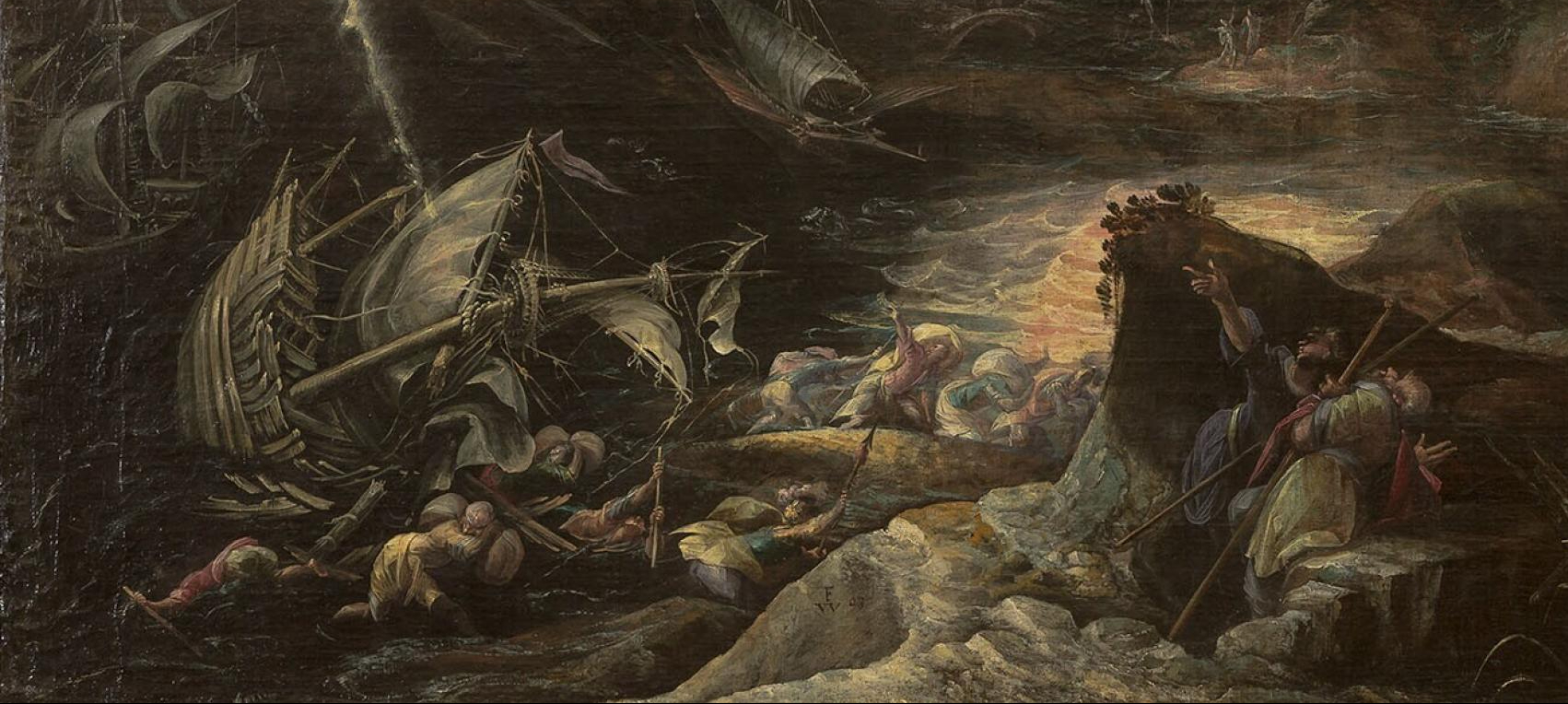
Luke’s second greatest achievement, however, was crafting an hermeneutical context in which Paul and his letters, so easily interpreted in ways that compromised the whole proto-orthodox enterprise, might participate in that looming civilizational victory over Greco-Roman polytheism. Acting as the preeminent moderator of early Christianity, and adeptly presenting himself as the trusted companion of the Apostle in the “we” passages, Luke preserved Paul through the storms that brought the Greek churches onto the shores of the age to come.5 Though this destination had been farther off than initially espied, the serpent’s bite no longer stung, and Paul’s message regarding Christ the Lord thundered “boldly and without hindrance” in the imperial capital.

1—This collection grew over time. By the middle of the 2nd century, Marcion’s New Testament scriptures included 10 Pauline works, the 7 undisputed epistles, 2 Thessalonians, Colossians, and a lost letter to the Laodiceans. His canon notably lacked Ephesians and the three Pastoral Epistles. Pseudonymous letters may have taken more time to integrate into the assemblage.
2—The letter we call Ephesians likely lacked an address in the autograph. It was perhaps designed from the beginning as a circular letter, meant for no one church.
3—See Bart Ehrman’s Lost Christianities 182-185.
4—See Pervo’s Dating Acts: Between the Evangelists and the Apologists.
5—Luke’s careful revision of earlier eschatological data proved crucial not only for the continued credibility of earliest Christianity in the minds of those still expecting the Parousia, but also as a means by which Christianity could insinuate itself among educated classes uninterested in the prospects of “end of the world” regime change (e.g. Origen, Eusebius). Luke has constructed a sea-worthy vessel not only for Paul’s letters and for Jesus the apocalyptic prophet, but also for some of their most radical ethical instruction on topics such as self-defense and retaliation, marriage and family, work and possessions, and the shameful way of the cross.

 Scribes of the Kingdom
Another excellent, shall I say unbiased analysis. I am much obliged for your thoughtful writing. I look forward to your analysis of the Gospel book called John.
LikeLike
I think Luke was also a social reformer who hoped that by emphasizing the dangers of wealth and Jesus’ love for the poor, the Christian community would set itself apart from Roman society by narrowing the gap between the rich and poor.
LikeLike