One function of divine sonship in the ancient world was to legitimize the rule of kings, sons of God, by associating them with deities and heroes of old. Such rulers were not merely the most powerful, the most wise, and the most crafty by nature’s lot but were invested with such traits by their heavenly fathers. They reigned at the behest of a divine patron, being the mediator of thaumaturgic national blessings. Fittingly, the people attributed private wonderworking abilities to these sons of god as well (e.g. Emperor Vespasian healed a blind man and restored a deformed hand). This conceptual landscape was expedient for rulers because it stifled rebellion—opposition of the king was equivalent to opposition of the paternal god who worked through him.
In the Roman world the divine sonship of the emperor was often promoted with reference to the Sun god Apollo, son of Olympian monarch Jupiter and primordial deity Latona (Greek: Leto). Beginning with Augustus, emperors appealed to Apollo as patron deity and the public persona of subsequent emperors drew heavily upon traditional depictions of the god (e.g. laurel wreath, lyre, silver bow). By the end of the 1st century AD the historian Suetonius attests to the belief that Augustus was so similar to Apollo because he was, in fact, his biological son. Other emperors, Caligula, Nero, and Domitian, for instance, emphasized their alleged connections with the Lord Apollo and claimed to be divine men and sons of god during their lives, receiving worshiped as such in some parts of the Empire. An imperial cult was thus born out of Apollonian myth and out of the ruins of the Roman Republic, one not dissimilar from those once popular in the East (e.g. the cults of Antiochus Epiphanes & Pharaoh). These emperors sought to appropriate Apollo’s lustrous reputation as Ἀλεξίκακος (“averter of evil”) and Ἀκέστωρ (“healer”) so as to secure their divinely-ordained mandate to rule. In more Biblical terms we might say that the emperors of Rome were messiahs of the gods, “men attested to the people by Apollo with mighty works and wonders and signs that Apollo did through them” (Acts 2:22). Apollo had “anointed the emperors with the holy spirit and with power such that they went about doing good and healing all who were oppressed by evil spirits, for Apollo was with them” (Acts 10:38).
Early Christians, of course, were sporadically persecuted for their refusal to participate in the sacrificial worship of the Apollonian emperor. Christians believed in another Son of God, an only Son of the only true God, θεὸς παντοκράτωρ. Within this dialectical competition, just as the emperor’s divine pretensions waxed so too did the suffering of those Christians who refused to give him his due.
Pythian propaganda
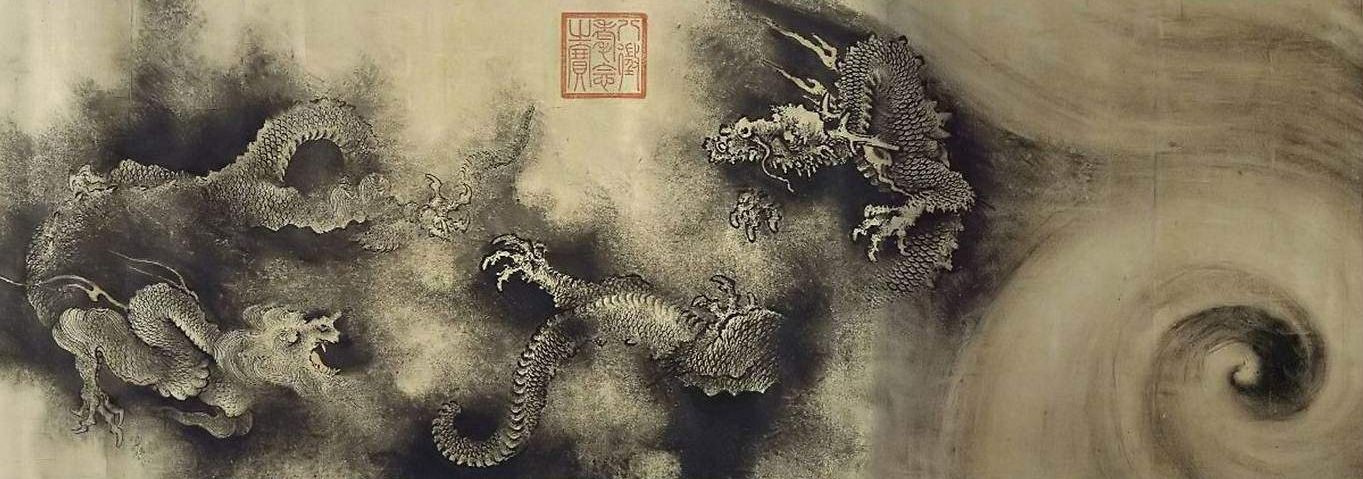
The first readers of the book of Revelation were largely Greek-speaking peoples who had been steeped in this syncretistic Roman mytho-ideology their whole lives. They were familiar with the theo-political propaganda underlying imperial claims. They would have thus quickly recognized the narrative in Revelation 12 as a Christianized retelling of the myth of Latona, Apollo, and the dragon Python. Much as the War of Independence or the Second World War have become combat myths that serve to determine and justify contemporary American identity and practice, this heroic tale of Apollo’s escape from and vanquish of great evil was an important component of Roman imperial identity.
According to one Latin version of the old Greek legend (i.e. Pseudo-Hyginus’ Fabulae), Python was a murderous serpent who long ago gave oracular responses at Mount Parnassus. In order to escape his fated destruction at the hands of the soon-to-be-born Apollo, Python persecuted the pregnant Latona with the help of a jealous Juno (Greek: Hera). At the direction of Juno, all the earth proved hostile to Jupiter’s consort; there was nowhere for Latona to deliver Apollo and his twin sister Diana (Greek: Artemis), goddess of the Moon. So Jupiter bore Latona on the north wind Aquilo2 to his brother Neptune who provided her with an underwater refuge on the island of Delos. Having finally eluded Python, Neptune brought the island up from the sea and the children were safely ushered into the world. A few days later Apollo slew the great dragon and took over his prophesying role by establishing the oracle at Delphi. Thus the cult of the imperial patron deity was inaugurated over the corpse of the chaos monster—Rome’s impending glory now divined by the Delphic sibyls. With the help of dragon-slaying Apollo the emperors would transform a wild Dionysian expanse of barbarian peoples into a manly civilization of wealth, wisdom, and might.
Many of these elements are retained in John’s telling of the story. Like Latona, the pregnant woman is a royal goddess, a crowned consort3 bearing the son of the supreme God. She is clothed with the Sun (Apollo) and treads the Moon (Diana). She is pursued by a devouring dragon but flies on God’s aquiline wings to safety. A great tumult of earth and water bring her story to a close and her child, protected by Heaven, lives to one day avenge his mother.
Within John’s framing, of course, Christ takes the place of the god Apollo. It is Christ who is the son of the high God and his glorious lover. It is Christ who escapes the dragon in (and out of) the womb and it is Christ who is destined to “rule all the nations with a scepter of iron” in the dragon’s stead (Revelation 12:5). John has thus annexed this complex of combat myths and their real-world ramifications: Christ and his servants are the true heirs to the glory and power of God, not the Roman imperial system. Christ is the true Apollonian emperor who will soon forge order out of strife on behalf of his people. The dragon’s reign over the inhabited world, here ironically representative of the pagan arrangement, is coming to a end: “[The Devil] knows that his time is short!” (Revelation 12:12). The age of the Apollonian Christ is about to begin. The Christian Apollo, he who prevailed over draconic imperial hostility, will come from God to establish a better order on earth, a Pax Christiana.
Goddess of the Apocalypse
This comparative-religious reading of Revelation 12 identifies the Woman of the Apocalypse, the mother of the Christ, in an unconventional way—she is the goddess Latona. John’s aim is thus not theological in a traditional sense. He does not seek to equate Christ’s actual mother, Mary, with Latona, Queen of Heaven, nor does he care, at least not here, to show that the Messiah was birthed from Israel or the Church. Instead, John intends to direct his hearers to a myth upon which the pagan emperors justified their reign. With this intertextual literary device deployed, the Seer then transforms a key component of imperial propaganda into a gospel of imminent rescue and victory for the saints. A people now pursued by dragons will soon rule the writhing imperium. In this way Christ mythically, not literally, becomes the Apollonian child of Latona by virtue of his future conquest of the Pythian mysteries embodied chiefly in the pagan world-ruler.

1—See Homeric Hymns 3 to Apollo and Pseudo-Hyginus’ Fabulae 140.
2—The masculine name Aquilo derives from the Latin word aquila meaning “eagle.”
3—Leto was often depicted wearing a crown and “queenly” was one of her epithets (cf. Homeric Hymn 3 to Delian Apollo). A Hellenized Egyptian version of the same myth was also popular in the Roman period. Isis, the glorious queen of Osiris, along with her son Horus, god of the Sun, contend with the monstrous Seth/Typhon for rule.

 Scribes of the Kingdom
This is a great post Alex…I need to respond to your email…will get to it. Seems I am inordinately busy these days…have taken on too much.
All best,
James
>
LikeLike
Very interesting. I’ve never heard this parallel with Revelation.
As far as sonship goes, I wonder if Matthew and Luke felt differently about sharing the accounts of Jesus’ conception. I wonder if Matthew, being a Jew, was more reticent than Luke but felt compelled because of his understanding of Isaiah 7:14.
LikeLike
Could be. I think both of them are careful to portray this miraculous pregnancy as the result of spirit-anointing rather than intercourse with a male deity. I can definitely still see someone like Matthew being uncomfortable with Jesus seemingly being the product of God’s spirit-seed.
LikeLike