The Elijah option: Contributions of Jehuite propaganda to early Christianity
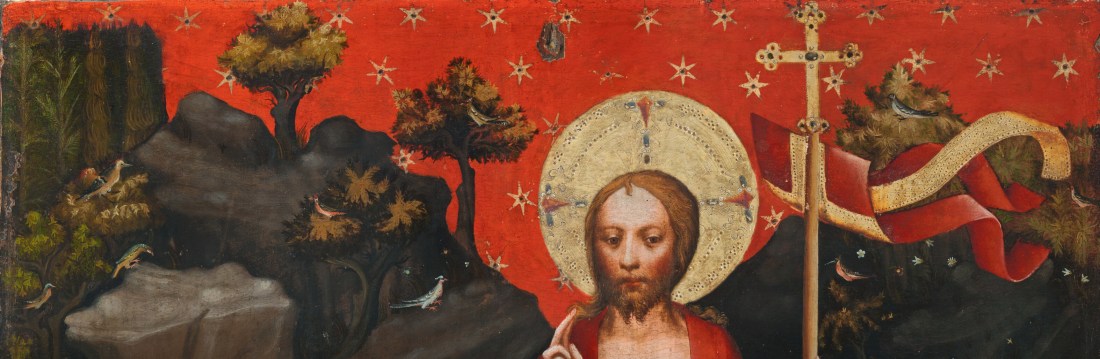
"Go, inquire of Baal-zebub" A prophet clad in hair and leather appears in Israel to usher in divine judgment and, perhaps, divine salvation. He announces the end of Beelzebub's reign and the restoration of the kingdom of God. For this work he is persecuted by Israel's rulers, and while hidden in the wilderness for forty … Continue reading The Elijah option: Contributions of Jehuite propaganda to early Christianity

Let them both grow together: Resignation as apocalyptic strategy at Qumran and Capernaum

From first to last, and not merely in epilogue, Christianity is eschatology, is hope, forward looking and forward moving, and therefore also revolutionizing and transforming in the present. The eschatological is not one element of Christianity, but it is the medium of the Christian faith as such, the key in which everything in it is … Continue reading Let them both grow together: Resignation as apocalyptic strategy at Qumran and Capernaum

The Gospel of Flavius Vespasianus: Mark’s counter-imperial purposes

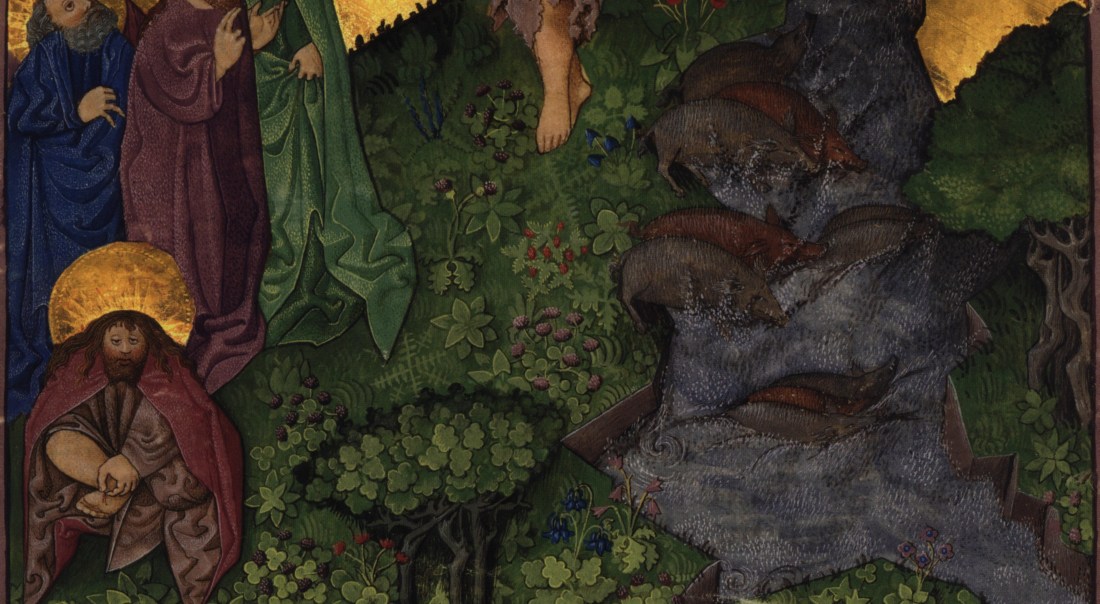
Last time I argued that the Markan account of the Gerasene Demoniac betrays knowledge of the Jewish uprising in the region of the Decapolis during the early years of Israel's war with Rome. The resemblance between Legion's ruin in the sea with Josephus' reporting of the Roman massacre of rebels on the banks of the … Continue reading The Gospel of Flavius Vespasianus: Mark’s counter-imperial purposes

Christ’s triumph at Gadara: Markan reflection on Israel’s rebellion

Josephus' account of the war in the north In AD 67 the Roman general Vespasian arrived on the shores of Ptolemais with his son Titus. They had been sent by the emperor to quell a Jewish rebellion in and around Judea. Upon landing, Vespasian and his legions proceeded inland to regain control of Galilee and … Continue reading Christ’s triumph at Gadara: Markan reflection on Israel’s rebellion

The crisis and catharsis of Christian ethics: Non-retaliation as eschatological key to the narrow gate

Theologian Walter Wink popularized the idea that Jesus taught his followers to non-violently resist oppressive authorities by taking socially-unexpected action in the face of injustice. This was typically accomplished by creatively exposing an evildoer to costly public shame. Wink is known particularly for his exposition upon three Dominical commands from the Sermon on the Mount … Continue reading The crisis and catharsis of Christian ethics: Non-retaliation as eschatological key to the narrow gate

A time to be rich and a time to be poor: Eschatological reversal in the Parable of the Rich Man and Lazarus

The parable of the Rich Man and Lazarus can be effortlessly incorporated into interpretative programs of progressive social action. This fable of a bourgeois oppressor receiving his just desserts for neglecting the poor—coming straight from the mouth of Jesus Christ—provides dependable ammunition for socialistic causes. Had the rich man only listened to the Law and … Continue reading A time to be rich and a time to be poor: Eschatological reversal in the Parable of the Rich Man and Lazarus

Sons of God at war: Apollonian Christ and Pythian Caesar in Revelation 12

One function of divine sonship in the ancient world was to legitimize the rule of kings, sons of God, by associating them with deities and heroes of old. Such rulers were not merely the most powerful, the most wise, and the most crafty by nature's lot but were invested with such traits by their heavenly … Continue reading Sons of God at war: Apollonian Christ and Pythian Caesar in Revelation 12

Θεοί at war: The deity of Christ and the fate of the empire

Most interpreters confine the development of divine Christology in the writings of the New Testament within the parameters set by the monotheistic Judaism of the second temple period. In this way the central hero of the work, "our great god and savior, Jesus Christ" (Titus 2:13), is recognized as none other than the one and only … Continue reading Θεοί at war: The deity of Christ and the fate of the empire

After Jerusalem fell: Israel’s dispossession and the emergence of New Testament narrative

At its inception the Christian gospel was a message to and for Israel. Two Hebrew prophets, John and Jesus, had been sent to the Jewish people on behalf of the Jewish people. They had come to turn Jacob's progeny back to God on the eve of the arrival of Israel's messianic kingdom. John and Jesus … Continue reading After Jerusalem fell: Israel’s dispossession and the emergence of New Testament narrative

Last of the disciples: John’s death and the Johannine relocation

The redactional treatment of the Apostles—and of John of Zebedee in particular—within the New Testament corpus offers clues as to the dating of the earliest Christian documents and as to the development of earliest Christian belief. In the first Gospel, the Gospel of Mark, Jesus predicts that the sons of Zebedee, the brothers James and … Continue reading Last of the disciples: John’s death and the Johannine relocation